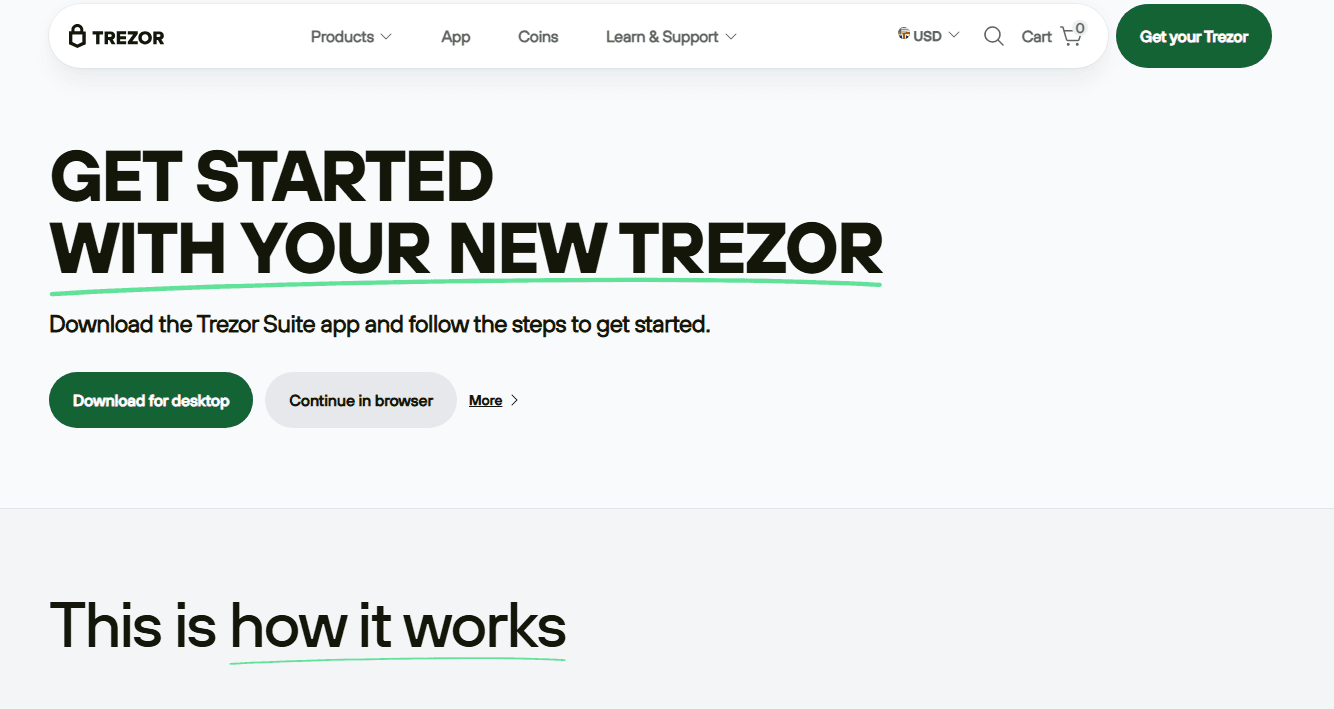
Trezor.io/start is widely recognized as the primary onboarding path for individuals who have purchased a Trezor hardware wallet and need a structured, secure, and beginner-friendly method to set up their device for the first time. Setting up a hardware wallet properly is one of the most important steps any cryptocurrency holder ever takes. Unlike online wallets or exchange wallets, a hardware wallet gives users complete control over their private keys. That control brings unmatched security, but it also places full responsibility in the hands of the user. A guide like Trezor.io/start exists to simplify this responsibility and help users avoid mistakes that could lead to loss of funds.
A hardware wallet such as a Trezor Model One or Trezor Model T is designed to keep private keys offline at all times. Even when connected to a computer, the wallet remains isolated, and private keys never leave the device. When a user wants to send a cryptocurrency transaction, the computer prepares the unsigned transaction, but the final signing takes place within the device itself. The user must confirm the details on the physical wallet by pressing buttons or interacting with a touchscreen. This physical confirmation step is what protects users even if their computer has malware. Because of this architecture, millions of users rely on hardware wallets to secure long-term crypto holdings, but secure usage begins with proper initialization, and that is what the setup guide helps explain.
When someone buys a new hardware wallet, the first step is to confirm that the package has not been tampered with. Although tampering is rare, it is always good practice to inspect the box, the seal, and the device for any signs of interference. A genuine device should not come with a pre-written recovery seed or a printed card filled in with words. If anything like that is included, it is a red flag. A proper hardware wallet generates the recovery seed internally and displays it only on its own screen. Once users verify that their device is legitimate, they proceed to Trezor.io/start where the guided instructions begin.
During setup, the user connects the wallet to a computer using a USB cable. The guide then directs the user to install the companion software. This software acts as the interface between the device and the blockchain networks. It helps users create accounts, view balances, organize addresses, send and receive payments, and update firmware. Without this software, the hardware device cannot communicate with the blockchain because the device itself does not have internet access. All internet-related actions are handled by the companion software, but sensitive operations remain confined to the hardware wallet.
One of the most important early steps is updating the device firmware if necessary. Firmware updates provide enhancements, improve compatibility, and patch potential vulnerabilities. Because cryptocurrencies evolve rapidly, firmware updates may introduce support for new protocols, coins, or security improvements. Users must always ensure they only install firmware from trusted sources. The guide emphasizes that firmware should only be installed when the device screen itself confirms the authenticity. This double-verification helps protect users from fake software or tampered installers.
After the firmware step, the guide helps users initialize the device. Initialization is the process of generating the recovery seed, setting up a PIN, and defining the basic structure of the wallet. The recovery seed is arguably the single most important element in cryptocurrency security. It is typically a list of 12, 18, or 24 words generated entirely offline, displayed on the hardware device’s screen. These words are the root of all private keys and addresses that will be used on the device. Anyone who has the recovery seed can restore the entire wallet on any compatible hardware device. Because of that, users must write the seed down carefully and keep it physically secure.
The guide stresses several essential rules: never type the seed into a computer, never upload photos of the seed, never share it with anyone, and never store it in cloud services. No legitimate support agent or website will ever ask for the recovery seed. The seed should remain offline and private for the entire lifetime of the wallet. If users lose this seed and their device becomes damaged or lost, the funds cannot be recovered. This is both a strength and a risk of decentralized systems. The user has total control, but also total responsibility.
After generating the recovery seed, the user must confirm it by re-entering it on the device. This step ensures that users wrote it down correctly and that no mistakes occurred in spelling or sequencing. Even a small error can prevent future recovery. Many users consider creating multiple copies of their seed phrase. They might keep one copy in a safe, another in a secure office drawer, and a third copy in a fireproof case. Some people engrave their seed into stainless steel plates designed to withstand fire, moisture, corrosion, and physical damage. These practices protect the seed from environmental hazards, accidental loss, and aging.
The next major step is creating a PIN. The PIN protects the hardware wallet itself from unauthorized access. If someone steals the device, they cannot use it without the correct PIN. Many devices also have a built-in security feature where repeated incorrect attempts trigger a delay or even wipe the device. The PIN must be strong, unpredictable, and not written in the same location as the recovery seed. The goal is to separate the two layers of security. The seed is a digital backup, while the PIN protects physical access.
Once the device is initialized with a recovery seed and PIN, users return to the companion software to begin adding accounts. On most modern hardware wallets, multiple blockchains are supported. Users can create a Bitcoin account, an Ethereum account, a Litecoin account, and so on. Some blockchains support multiple address formats, so users may choose between legacy, SegWit, or native SegWit for Bitcoin, or between various token standards on Ethereum. Each account is derived from the same seed phrase but remains separate for organizational clarity.
One critical concept introduced in the guide is address verification. When users want to receive cryptocurrency, the software displays a receiving address. The user must always verify the address on the hardware device screen. This step ensures that malware on the computer cannot alter the displayed address. If the address shown on the computer matches the address on the hardware wallet, the user can safely share that address with others or copy it for receiving transactions. If they do not match, the user should immediately cancel the action and investigate.
Sending cryptocurrency follows a similar verification process. The software prepares the transaction details, including the recipient address, amount, and fees. Then, the hardware wallet displays the exact details and waits for user confirmation. The user must inspect the information carefully. Once confirmed, the device signs the transaction offline and sends it back to the software for broadcasting. This design means that even if the computer is infected with malware, the hardware wallet prevents unauthorized signing. It is impossible to spend funds without physical interaction with the device.
Security education is another major theme addressed in the setup guide. Users must understand the risks of phishing attempts. Scammers often create fake versions of setup websites with similar URLs. They use deceptive ads, pop-ups, or messages to trick users into entering their recovery seed. The guide teaches users to type web addresses manually, avoid clicking suspicious links, and verify website authenticity. The recovery seed must never be entered anywhere except the hardware device itself. If a website asks for a seed phrase, it is always a scam.
In addition to phishing awareness, the guide teaches digital hygiene. Users should keep their computer free of malware by using updated operating systems, avoiding pirated software, and using trusted browsers. Browser extensions can also be dangerous, as some malicious extensions are designed to spy on crypto activities or modify displayed wallet addresses. The safest practice is to maintain a clean, secure computer environment, especially when interacting with cryptocurrency.
The concept of a passphrase is also introduced during advanced setup. A passphrase is an optional addition to the recovery seed. It behaves like a “25th word” that must be entered every time the wallet is unlocked. Passphrases allow users to create hidden wallets. These wallets are not visible unless the exact passphrase is entered. This feature is beneficial for users who want an extra layer of protection. However, passphrases come with an important warning: if the passphrase is forgotten, the hidden wallet becomes permanently inaccessible. There are no backups or recovery systems for passphrases beyond the user’s own memory or documentation.
The setup guide often emphasizes that cryptocurrency management should be approached with long-term planning. For example, users should consider what will happen to their funds in emergencies or unforeseen circumstances. Some users create inheritance plans, leaving clear but secure instructions for trusted relatives. Others store their seed in safety deposit boxes or private vaults. Because crypto assets have no centralized authority that can restore access, planning ahead is essential.
Another area covered during onboarding is asset compatibility. Hardware wallets support a wide variety of cryptocurrencies, but not all tokens are supported directly. Some assets require the use of third-party wallets or external interfaces. It is important for users to check compatibility lists and follow instructions specific to the assets they plan to store. Sending unsupported tokens to an incompatible address can result in permanent loss. Understanding which networks and tokens are supported helps users avoid costly mistakes.
The guide also discusses how transaction fees work. Fees vary by blockchain, network traffic, and user preferences. Bitcoin, for example, can become congested during high-volume periods, causing fees to rise. Ethereum fees fluctuate depending on demand for decentralized applications. The companion software usually offers several fee options, ranging from low to high priority. Understanding how fees affect transaction speed enables users to choose the right settings for their needs. Beginners often choose default settings, while advanced users adjust fees based on real-time conditions.
Privacy considerations are also mentioned. While hardware wallets keep private keys secure, blockchain transactions remain publicly viewable. This transparency means that anyone can trace transactions associated with a particular address. Users seeking privacy may use new addresses for each transaction or adopt practices that reduce linking personal identity to wallet addresses. However, privacy must be balanced with security and regulatory considerations depending on each user’s circumstances.
As the setup process concludes, the guide reminds users to keep their devices and seed backups safe. This includes protecting the hardware wallet from physical damage, theft, and environmental hazards. Some users store their device in a protective case or safe. Others keep a backup hardware wallet initialized with the same seed, ready to use if the primary device fails. This redundancy helps prevent disruptions caused by hardware failure.
Finally, the guide encourages users to stay informed. The crypto landscape evolves quickly. New features, updates, security advisories, and best practices emerge regularly. Users should periodically check for firmware updates, software improvements, and compatibility announcements. Staying informed helps users maintain strong security practices and avoid emerging threats.
In summary, Trezor.io/start serves as a comprehensive onboarding guide that helps new hardware wallet owners set up their device, generate a recovery seed, configure security features, install companion software, verify addresses, manage transactions, protect their seed, avoid scams, understand fees, evaluate asset compatibility, and practice long-term responsible crypto management. The guide is essential for beginners and experienced users alike because it reinforces the principles of self-custody, security, and careful handling of digital assets. By following a structured setup process, users can gain confidence, avoid costly mistakes, and protect their cryptocurrency holdings with one of the most secure methods available. If users understand the importance of their recovery seed, maintain safe digital habits, and use the device correctly, they can enjoy strong security and complete control over their funds.